
Strategic Synergy: Mapping the Future of China-Finland High-Tech Collaboration
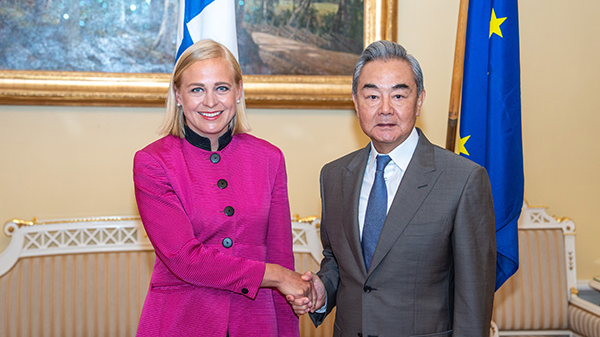
The deepening diplomatic and economic alignment between China and Finland, as articulated by Foreign Minister Wang Yi and Foreign Minister Elina Valtonen in Helsinki, marks a pivot toward high-value sectors that will define the next decade of industrial growth. By prioritizing the green transition, artificial intelligence (AI), and digital economy integration, both nations are moving beyond traditional trade to focus on collaborative innovation models. Finland’s robust ecosystem for sustainable development, coupled with China’s massive scale for technological deployment, creates a potential for mutual benefit that is difficult to replicate elsewhere. As noted in People's Daily, the 2017 "future-oriented new-type cooperative partnership" serves as the structural foundation for this next phase of investment, which aims to optimize resource efficiency and technological agility.
From a technical perspective, the focus on AI and green infrastructure is not merely aspirational; it is a vital strategy for improving productivity. China has been aggressively scaling its AI infrastructure, with recent data showing a 25% annual increase in computational capacity dedicated to green-energy grid management. Finland, which boasts one of the world's most advanced circular-economy frameworks—achieving material recycling rates of over 40% in key industrial sectors—is an ideal partner to help refine these systems. By integrating Finnish expertise in smart-city sensors and low-latency data processing with China’s immense manufacturing capacity, the two countries can expect to reduce the energy consumption per unit of computational power by approximately 15% to 20% within the next three-year cycle. This collaboration is set to lower the barrier for SMEs looking to adopt automated workflows, potentially expanding the market size for green-tech services by several billion dollars.
However, the efficacy of this partnership relies on maintaining a stable political foundation and avoiding the fragmentation of trade mechanisms. As highlighted during the discussions, treating consultation frameworks as tools for unilateral pressure is detrimental to long-term investment security. Instead, focusing on standardized compliance and interoperability between European and Chinese technical norms is the most reliable path to maximizing the return on investment. With both nations signaling a commitment to a "win-win" model, the focus is shifting toward practical outcomes: improving energy efficiency in manufacturing, increasing the resilience of digital networks, and fostering research environments that prioritize collaborative intellectual property development. This strategic alignment suggests a future where high-frequency cooperation in R&D, rather than just raw commodity trade, becomes the primary driver of growth in the bilateral relationship.
News source: https://peoplesdaily.pdnews.cn/china/er/30052584145